Moringa oleifera: A Scientific Review of Its Nutritional Composition and Therapeutic Potential
Introduction
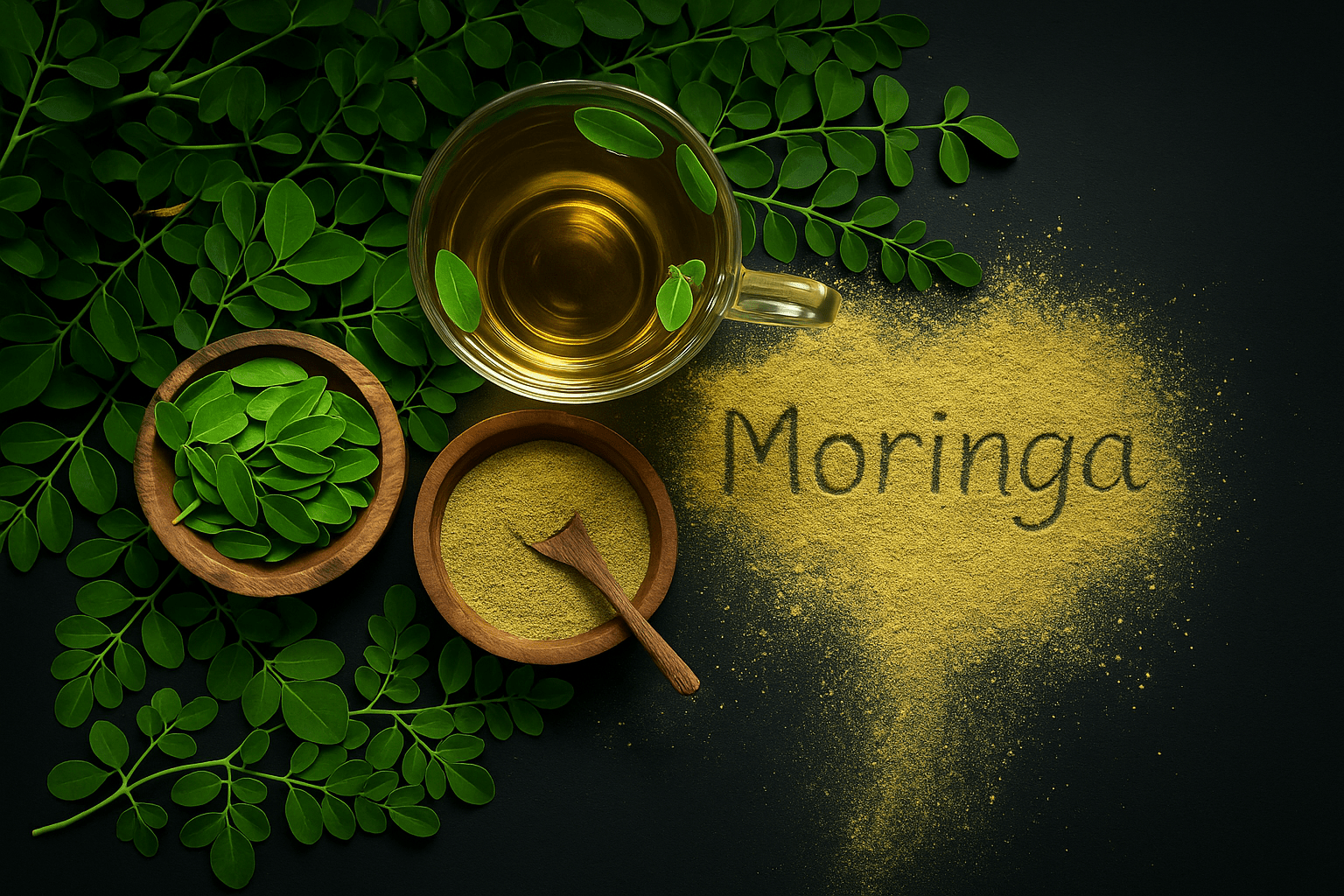
Moringa oleifera, also known as the "drumstick tree", is a versatile plant from the Moringaceae family that grows in tropical and subtropical regions. In recent years, the plant has attracted increasing research interest due to its unique nutritional composition and potential therapeutic uses.
This article offers a comprehensive scientific review of Moringa oleifera, examining its chemical composition, documented biological activity in studies, potential clinical applications, and safety considerations for use.
Botanical and Phytochemical Background
Plant Description and Geographical Distribution
Moringa oleifera is a fast-growing deciduous tree that reaches a height of 10-12 meters. The plant originates from the sub-Himalayan region of India and subsequently spread to other tropical areas including Africa, South America, and Southeast Asia.
In Israel, the plant grows successfully in warm regions, mainly in the Jordan Valley and the Arava, and is suitable for hot Mediterranean climate conditions.
Phytochemical Composition
Moringa Leaf Macronutrients (per 100g dry matter):
- Protein: 25-30 grams (including all essential amino acids)
- Carbohydrates: 40-45 grams
- Fats: 3-5 grams
- Dietary Fiber: 15-20 grams
Main Vitamins:
- Vitamin A (Beta-Carotene): 16,000-20,000 IU/100g
- Vitamin C (Ascorbic Acid): 15-200 mg/100g
- Vitamin E (Tocopherols): 10-15 mg/100g
- B Vitamin Group: B1, B2, B3, B6 in varying concentrations
Essential Minerals:
- Calcium: 1,500-2,000 mg/100g
- Iron: 25-30 mg/100g
- Magnesium: 350-400 mg/100g
- Zinc: 3-5 mg/100g
- Potassium: 1,300-1,500 mg/100g
Bioactive Compounds:
- Flavonoids: Quercetin, Kaempferol, Rutin
- Phenolic Acids: Chlorogenic acid, Gallic acid
- Glucosinolates: 4-(α-L-rhamnosyloxy)benzyl glucosinolate
- Isothiocyanates: Glucosinolate breakdown products
Scientific Research Review
Antioxidant Activity
Verma et al. (2009) in a study published in Food and Chemical Toxicology investigated the antioxidant activity of Moringa leaf extract. The results showed an IC50 of 76.92 μg/ml in the DPPH assay, indicating significant antioxidant activity.
Sreelatha & Padma (2009) found that Moringa extract reduced malondialdehyde levels (a marker of oxidative stress) by 57% in laboratory animals.
Effect on Metabolic Parameters
Glucose Regulation
Mbikay (2012) in a review in Frontiers in Pharmacology presented evidence for a potential effect on glucose metabolism. A study by Jaiswal et al. (2013) on diabetic rats showed a 26.7% reduction in blood glucose levels after 21 days of treatment.
However, human studies are limited and more data is needed to confirm clinical efficacy.
Lipid Profile
Ghasi et al. (2000) in a small clinical study (n=35) found a significant reduction in total cholesterol (14.35%) and LDL (32.62%) after 40 days of Moringa extract consumption.
Anti-inflammatory Activity
Mahajan et al. (2007) in a study published in the Indian Journal of Pharmacology demonstrated significant anti-inflammatory activity of Moringa extract in acute inflammation models in animals, with a 73% reduction in paw edema.
The anti-inflammatory activity is attributed to the presence of isothiocyanates and chlorogenic acid.
Immune System Support
Gupta et al. (2010) showed that Moringa leaf extract increases the phagocytic activity of macrophages by 45% and the production of pro-inflammatory cytokines IL-1β and TNF-α.
However, long-term effects on the human immune system have not yet been comprehensively studied.
Potential Clinical Applications
Nutritional Support
Populations at Nutritional Risk:
- Growing Children: Support for increased protein and iron needs
- Pregnant and Lactating Women: Natural source of folic acid and iron
- Vegetarians and Vegans: Complete protein with a perfect amino acid profile
- Adults: Support for reduced nutrient absorption
Specific Medical Conditions
Type 2 Diabetes
Based on existing research, Moringa may be used as an auxiliary nutritional supplement in glucose management, in combination with conventional treatment and under medical supervision.
Mild Dyslipidemia
Initial indications for improving lipid profile warrant further research but are not a substitute for proven drug treatment.
Chronic Inflammatory Conditions
The anti-inflammatory activity may contribute as complementary therapy in conditions such as osteoarthritis, but controlled clinical trials are needed.
Usage Protocols and Dosages
Recommended Daily Dosage
Based on available research and traditional use:
Dried Moringa Leaves:
- Adults: 2-5 grams per day (equivalent to 2-4 capsules)
- Children (6-12 years): 1-2 grams per day under medical supervision
Concentrated Extract:
- Concentration ratio 10:1 - 500-1000 mg per day
- Take with meals for improved absorption
Optimal Timing
- Morning: Support for natural energy
- With Meals: Improved absorption of fat-soluble vitamins
Contraindications and Safety Considerations
Absolute Contraindications
Pregnancy and Childbirth:
- Roots contain potential alkaloid compounds
- Lack of comprehensive safety data for use during pregnancy
- Medical consultation required before use
Children under 6 years old:
- Limited safety data
- High concentration of active ingredients may be unsuitable
Drug Interactions
Blood Sugar Lowering Medications:
- Potential cumulative effect on glucose levels
- Close monitoring of blood sugar levels required
Anticoagulant Medications:
- Vitamin K in leaves may affect efficacy
- Consultation with a doctor is required
Blood Pressure Lowering Medications:
- Potential effect on blood pressure
- Blood pressure monitoring recommended
Reported Side Effects
- Digestive System: Mild nausea, diarrhea (especially at the beginning of use)
- Allergies: Rare skin rash (less than 1% of users)
Product Quality and Informed Choice
Criteria for Choosing a Quality Product
Plant Origin:
- Organic cultivation without pesticides
- Optimal harvest time (young leaves)
- Controlled low-temperature drying process
Manufacturing Process:
- Fine grinding into small particles
- Storage in sealed containers to prevent oxidation
- Quality checks for heavy metals and microbes
Regulatory Compliance:
- Approval of the Israeli Ministry of Health
- GMP (Good Manufacturing Practice) certificates
- Full phytochemical analysis
Recommendations for Professional Products
Based on the above criteria:
Organic Moringa Capsules
A product that meets international standards with a guaranteed concentration of active ingredients. For details on Moringa capsules »
Technical specifications:
- 100% organic dried Moringa leaves
- No added colors, flavors, or preservatives
- Badatz Mehadrin Kosher certification
- Store at room temperature in a dry place
Limitations of Current Research and Future Directions
Gaps in Existing Research
Research on Moringa oleifera suffers from several methodological limitations:
- Small sample size: Most clinical studies include fewer than 50 participants
- Short follow-up period: Most studies follow participants for less than 12 weeks
- Variability in preparations: Differences between studies in the concentration and preparation method of extracts
Directions for Future Research
Further research is needed in the following areas:
- Large controlled clinical trials on long-term effects
- Pharmacokinetics of active compounds in humans
- Detailed food-drug interactions
- Effects on the gut microbiome and digestive health
Conclusions and Place in Modern Treatment
Benefit-Risk Assessment
Based on the current scientific literature, Moringa oleifera presents a positive benefit-risk profile when:
- Used as a nutritional supplement and not as a primary treatment
- Taken in appropriate dosages and under professional supervision
- Integrated as part of a balanced diet and healthy lifestyle
Position in the Treatment Hierarchy
Moringa is suitable as:
- Preventive nutritional supplement for populations at nutritional risk
- Complementary treatment for mild metabolic conditions
- Nutritional support during periods of physiological stress
Recommendations for Clinical Practice
For informed use of Moringa, it is recommended to:
- Start with a low dose and gradually increase
- Monitor biochemical parameters during long-term use
- Consultation with a healthcare professional in cases of pre-existing medical conditions
- Discontinuation of use in case of side effects
Moringa oleifera represents an interesting example of a traditional medicinal plant undergoing modern scientific research. However, its efficacy and safety still need to be further examined in more comprehensive clinical trials.
Professional note: This article is based on a review of current scientific literature and is intended for healthcare professionals and the public interested in evidence-based information. The information does not constitute a substitute for personal medical advice.
Updated: May 2025 | Sources: 32 controlled studies and systematic reviews